
Museums and architecture we will visit in:

The Stedelijk Museum of Modern Art in Amsterdam (SMCS), temporarily housed in the former Post Group building in Amsterdam, opened its doors in this location on May 16, 2004. This museum is called Stedelijk Museum CS., which reflects not only to the location close to Amsterdam’s Central Station, but also to the fact that the Museum will be sharing the building with other users, a design center and a cafe: Stedelijk Museum cum suis. Look for The ‘old’ Stedelijk on the Museumplein to open it's doors again in 2008. It has been closed since January 1, 2004.
Location: Stedelijk Museum CS, Oosterdokskade 3-5, Amsterdam.
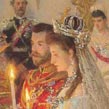
The last Tsar and his Family at the Hermitage Amsterdam, Sept. 18, 2004 – Feb. 13, 2005 Rarely has a personal story been so interwoven with the course of world history as that of the last Tsar of Russia and his family. The exhibition presents the life of the last Tsar and Tsarina, Nicholas II (1868–1918) and Alexandra (1872–1918) and their five children Olga, Tatiana, Maria, Anastasia and the Tsarevich Alexei. As symbols of the old Russia, the Bolsheviks in Yekaterinburg murdered them in 1918, six months after the Tsar had abdicated. Numerous personal possessions, correspondence, paintings, photos and objets d’art owned by the family will be on show at the Hermitage Amsterdam, from September 18, 2004 through February 13, 2005.
Location: Nieuwe Herengracht 14, 1018 DP Amsterdam
Now in the JHM
Diaspora: Homelands in Exile. Photographs by Frédéric Brenner
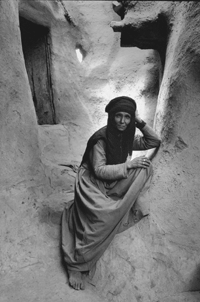
"What does ‘being Jewish’ mean: what unites Jewish people? This question has absorbed French photographer Frédéric Brenner (born Paris, 1959) for 24 years. He has travelled the world, chronicling Jewish life in more than forty countries. From Israel to China, from Argentina to Poland: in each new place, Brenner’s questions took on a different significance. Each Jew he met reacted with a unique answer. The photographer and social anthropologist realized that being Jewish isn’t easy to explain. His photographs reveal the many-facetted world of the Jewish Diaspora. The Jewish Historical Museum is presenting a selection of 150 of the most intriguing photographs from Brenner’s vast collection numbering more than 80,000 negatives. An exhibition of this work has previously been shown to great acclaim in New York’s Brooklyn Museum of Art. His magnificent and brilliantly sharp black-and-white pictures show us all kinds of figures, some everyday, some startlingly unexpected, some posed and some caught unawares."
Runs from September 19, 2004 to February 27, 2005
Location: Postbus 16737, 1001 RE Amsterdam

The Van Gogh Museum consists of two buildings: the main structure and the eliptical Exhibition Wing. The architecture of the museum has a complex and varied history, with many different architects contributing to it's design, but through the creative contributions of all these designers, the museum complex has become a true Gesamtkunstwerk, in which the different parts contrast with and complement each other, and in which the elliptical building enters into an absorbing dialogue with the main structure's functionalist design.
In the autumn of 2004 the Van Gogh Museum started a major exhibition on
the emergence of the French Art Nouveau movement viewed from the perspective
of art dealer and collector Siegfried Bing (1838-1905). In fact, the name of his Paris gallery,
L’Art Nouveau, was adopted to describe the late nineteenth-century art movement,
otherwise known as Jugendstil.
Bing played a key role as a promoter of Asian art, which was to have an enormous influence on many nineteenth-century artists, including Vincent van Gogh. Van Gogh developed a fascination for Japanese prints while in Paris (1886-88) and bought hundreds of prints and woodcuts from Bing. More than 400 objects and works of art that passed through Bing’s gallery will be presented, some in period rooms: glassware from Tiffany, paintings and sculptures by artists such as Toulouse-Lautrec, Rodin, Claudel and Vuillard, furniture, and ceramics and jewellery by Van de Velde, Colonna, De Feure and Gaillard. It is the first exhibition in the Netherlands of this magnitude to focus on the French Art Nouveau. A selection from Vincent and his brother Theo's collection of around 500 prints, now in the collection of the Van Gogh Museum, is presented in the print room of the exhibition wing parallel to the major Bing exhibition. The presentation also includes works by Van Gogh that were influenced by Japanese examples.
November 26, 2004 - February 27, 2005
Location: Van Gogh Museum Amsterdam, Paulus Potterstraat 7, 1070 AJ Amsterdam
To find out more information about channel and canal cruises, please visit:

| Home | Itinerary | Museum Tours Page 1 | Museum Tours Page 2 | Submission Form | About / Contact Us | Dedication |